On August 10 this year, the Ministry of Industry and Information Technology and the National Development and Reform Commission jointly issued the "Three-Year Action Plan for Expanding and Upgrading Information Consumption (2018-2020)". The report proposed that by 2020, the scale of information consumption will reach 6 trillion yuan, with an average annual growth of more than 11%. According to the deployment of the Ministry of Industry and Information Technology, my country will realize 5G commercial use in 2020. Recently, many places have revealed timetables and development goals for the layout of 5G construction. On August 13, Beijing also officially launched the first batch of 5G sites, and 5G construction has entered a stage of rapid acceleration.
Lei Ming, communications industry analyst at CITIC Securities: According to our calculations, the construction volume of 5G base stations is expected to reach 1.3 times that of 4G, and capital expenditure will increase by 55% relative to 4G, reaching 1.16 trillion. According to the elasticity of income and the order of income certainty, we are optimistic about the main equipment, RF and antenna, optical module and PCB sectors. As 5G commercialization is also gradually advancing this year, 5G concept stocks are also rising in the A-share market. From July this year to now, the three major stock indexes have continued to fall, and many stocks in the communications sector such as ZTE, Optical Node and Fiberhome have risen by more than 16%. In addition to being favored by funds, many 5G concept stocks have been recommended by institutions. Among them, Zhongji Xuchuan, Dongshan Precision, Meitainuo, Sunsea Intelligent, Heertai, Tianfu Communication and other stocks have been favored by institutions and received "buy" or "overweight" ratings, but analysts pointed out short-term risks. Tang Haiqing, chief analyst of the communications industry at Tianfeng Securities: 5G implementation will take time. It is highly likely that the next six months to a year will not be the stage for large-scale 5G investment to be implemented, because it will also bring certain risks, that is, the stock price rises too fast, does not reasonably reflect the fundamentals, or reacts too far ahead of time to the fundamentals. Wei Leping, executive deputy director of the Communications Technology Committee of the Ministry of Industry and Information Technology: 5G has a relatively high frequency band, and it requires a large number of base stations, so the entire investment strategy and investment returns are uncertain. It is unclear whether the equipment can do it, and the price we expect. Whether the performance and price of these devices are acceptable, and whether the future vertical applications can explode on a large scale as we expect, these are all uncertain factors.
In the 5G era, a movie can be downloaded in one second. VR live broadcast can be transmitted in real time.
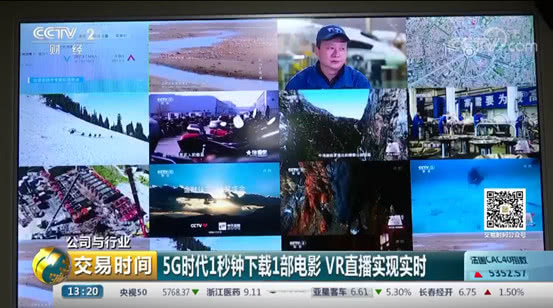
In 2018, 5G will be commercially piloted in several cities in China, and many overseas operators are also preparing for commercial pilots. In June this year, the 5G international standard was released. From 4G to 5G, what changes will the new generation of mobile communication technology bring to our lives? What stage has 5G technology reached at present?
As the fifth generation of mobile communication technology, the first feeling that 5G network brings to people is "fast". It only takes one second to open the mobile video client and download a high-definition video. The reporter experienced the speed on a 5G experience car. In the mobile state, the average speed of the experience car on the road test on Linjiang Avenue in Zhujiang New Town, Guangzhou exceeded 1Gbps, and the peak value could reach 3Gbps. Chen Qiming, a 5G technical expert of China Mobile Guangdong Company: Compared with 4G, the biggest feature of 5G is its high speed. Its peak rate can reach 100 times that of 4G. It supports the simultaneous transmission of multiple channels of high-definition 4K video in a mobile state. What we are seeing now is a business demonstration of 16 channels of 4K simultaneous interpretation. In the future, in a mobile state, it can also support more than 50 users in the same place to watch high-definition 4K videos on the Internet at the same time. In the 4G network, the delay from the terminal to the base station is generally 5 milliseconds, and the delay from the terminal to the server is 50~100 milliseconds. In the 5G network, the delay from the terminal to the base station can be reduced to 1 millisecond, and the delay from the terminal to the server can reach 10 milliseconds. The technician in front of me is demonstrating VR under 5G. The high-definition images captured by the 360-degree panoramic camera deployed on the edge of the Pearl River are transmitted to the large display screen of the experience car through the 5G network. At the same time, the VR glasses and IPAD screens connected in the car can clearly display the returned video through the 5G network. Chen Qiming, a 5G technical expert of China Mobile Guangdong Company: What we are seeing now is a 360-degree VR live broadcast. VR live broadcast service cannot be realized in the 4G era because it has very high requirements for data transmission. But with 5G, we can not only see some scenes in front of us, but also see the surrounding environment in 360 degrees. At the same time, we can also observe some details of the scene at will by zooming in or out. In the future, this service can be applied to concerts, basketball sports events, etc. 5G is an important part of realizing automation in high-speed environments. Fast data transmission network is the basis for ensuring vehicle driving safety. 5G will bring a new opportunity for automated driving in high-speed environments. In a pilot area of 5G in Shenzhen, reporters saw a bus equipped with Alphaba's intelligent driving bus system running on a 1.2-kilometer line. The system has realized pedestrian and vehicle detection, deceleration and avoidance, emergency parking, obstacle detour, lane change, automatic stop at the station and other functions under automatic driving. Wang Qingyang, deputy general manager of the network development department of China Telecom Shenzhen Branch: At present, we have completed the construction of three base stations on the Alphaba automatic driving route in Shenzhen Futian Free Trade Zone, covering the entire operation route. At present, real-time video feedback is provided on the car. We plan to install 4K high-definition TV and our IPTV on it. In addition, we will also develop high-precision positioning and remote driving on it in the future.
5G testing is underway as operators seek breakthroughs in application technology

At present, the three major telecommunications operators have entered the "5G era". 5G commercialization in 2020 means that various terminal products must enter the market, and there is only one and a half years left for R&D, testing and production in the industry chain. So, what difficulties and bottlenecks are there in the pilot process of 5G technology?
The reporter came to the ZTE Park in Xili, Shenzhen, and saw Hu Xian and his colleagues testing the 5G pilot rate. Hu Xian has been conducting research on communication network construction for decades. He said that the higher the frequency band, the lower the penetration. The high-frequency band characteristics of 5G require operators to pay attention to indoor penetration issues. The next step is the operator's networking plan, and how the 4G network and 5G network can smoothly interoperate. The technical connection urgently needs a breakthrough. Hu Xian, manager of the network construction department of China Unicom Shenzhen Branch: We are now in a 5G experimental scenario. According to the test results, the rate of 5G is about ten times that of 4G. Different customer application requirements, especially the demand for high-speed applications, bring about the need for more and more refined networking structures. In terms of the coverage area of a single unit, it is getting smaller and smaller, and it is becoming more and more grid-like, and even some capillary networking methods in the future. This may be the biggest difference from previous technologies. It is reported that many operators have announced that they will deploy 5G test networks that support 5G commercial scenarios in field trials and conduct networking tests. The test content includes the coverage capability and strength of 5G signals, switching between base stations, interoperability between 4G and 5G core networks, etc. Different test services are equipped for the development plans of different cities. Cai Weiwen, General Manager of Planning and Technology Department of China Mobile Guangdong Company: Since 2018, we have entered a large-scale test. One of the main tests we want to test is end-to-end, interoperability between multiple manufacturers and some business tests. In the application test, we will combine some application scenarios. For example, we have signed some cooperation agreements with GAC and China Southern Power Grid, and are currently promoting them, including autonomous driving and smart grid tests. Zhu Changbo, Deputy Director of China Unicom Network Technology Research Institute: We have also chosen 16 cities to conduct the 5G pilot. In different places, we will have some applications for different industries, and also combine different advantageous resources in various places to demonstrate the application of 5G. For example, in Qingdao, we are conducting the pilot application of 5G+VR. For example, in Chongqing, we are targeting smart transportation, smart finance and smart medical care in Shenzhen, etc. According to industry insiders, compared with 4G, 5G can better meet the transmission guarantee of vertical industries in terms of security and service, but this requires operators to build a new 5G core network and be able to connect the existing core network and user data. At present, my country's 5G spectrum has not been allocated, and the uncertain frequency allocation will affect the industry's support for equipment development and other aspects. Zhang Yong, President of China Unicom Network Technology Research Institute: At present, most industries are still blank in 5G-based applications. Whether it is from the terminal or the application standards, as well as the application scenarios, and some feasibility of future marketization, we need to explore.
5G commercialization enters the sprint stage, and communication operators expand R&D investment
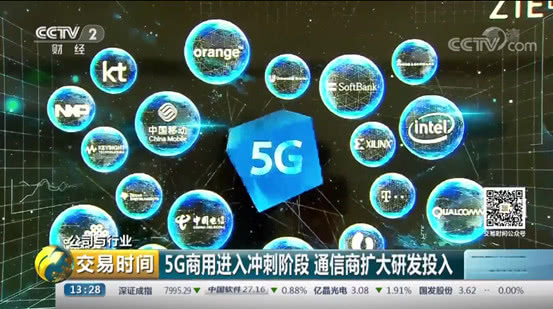
According to the "China 5G Industry Development Prospects Forecast and Industry Chain Investment Opportunity Analysis Report", in the early stage of 5G commercialization, the equipment manufacturer's income brought by network equipment investment will become the main source of 5G direct economic output. It is estimated that in 2020, the total revenue of network equipment and terminal equipment will be about 450 billion yuan, accounting for 94% of the total direct economic output. So, how will these network equipment manufacturers seize this opportunity? In June this year, the introduction of the 5G international standard was regarded as 5G "breaking the shell", marking the official release of the first truly complete international 5G standard. The freezing of the SA independent networking solution means that mobile terminal devices based on 5G networks can start R&D, production and testing under unified standards. It is reported that in 2019, commercial terminals based on 5G chips will be launched, including Intel's fully connected PC, Huawei's 5G mobile phones, etc. Recently, OPPO, vivo, Xiaomi and Huawei have also announced new progress in 5G mobile phones. Zhao Ming, President of Huawei Honor: (Currently) released our Kirin 980 (mobile phone) and Balong chip 5G solutions. Based on this solution, we have fully verified the entire 5G link and 5G-based RF to baseband RF and business in the laboratory. The next step is to wait until the commercial network standards of operators emerge and release the corresponding 5G terminal verification standards. With the launch of these standards, our 5G products will also be launched. 5G mobile phone applications require basic technical support. Xiang Jiying has been engaged in the research and development of core technologies for 5G equipment for many years. In the first half of this year, their team developed a number of 5G devices in response to the different needs of operators for 5G spectrum. Xiang Jiying said that the three major scenarios of 5G services correspond to the three core performance indicators of bandwidth, latency, and number of connections. The requirements in these three aspects have been greatly improved compared to 4G. In order to meet these requirements, the team has developed and adopted a large number of new technologies. Xiang Jiying, Chief Scientist of ZTE: The one above is our 3.5G, 64-antenna 5G Massive MIMO device, and the one below is a 16-antenna 3.5G (device), but now the spectrum may be redivided, so we have developed a 2.6G version, which is also 64 and 16 antennas, and is also under development. Because in addition to the low frequency band, 5G also has higher frequency bands, namely 28G and 39G.
Yang Zhaohua's company has been preparing for the equipment needed for 5G in recent years. Currently, more than 50% of the company's R&D personnel are invested in 5G R&D, and many 4G equipment production lines have also been transferred to prepare for the production of 5G equipment. Yang Zhaohua, general manager of the network production line of FiberHome Communication Technology Co., Ltd.: The number of personnel has increased by 20% on the basis of the original personnel. Now more than 50% of the entire R&D personnel are invested in 5G development. From the production and manufacturing aspect, it is separate. Additional equipment production lines have been added for 5G production lines. We estimate that by the end of this year, this (4G production capacity) may fall by about 20%.
According to the "China 5G Industry Development Prospects Forecast and Industry Chain Investment Opportunity Analysis Report", starting from the official commercialization of 5G in 2020, it is expected to drive about 484 billion yuan of direct output and 1.2 trillion yuan of indirect output that year. By 2030, the direct output and indirect output driven by 5G will reach 6.3 trillion yuan and 10.6 trillion yuan respectively, with an average annual compound growth rate of 29% and 24% respectively. Wei Leping, Executive Deputy Director of the Communications Technology Committee of the Ministry of Industry and Information Technology: The international market has just started commercialization of this (5G), and we are just starting now, and the gap is not big. In terms of total investment, the investment of the three major operators alone is definitely more than 1 trillion yuan. At the same time, it will also drive the effect. If the driving effect is calculated at 3.3 (times), it can at least drive social investment of 4 trillion yuan, so this market is very considerable.